Hardware
The firmware runs on three ESP32 chips. Every board with one of them and at least 4 MB of flash should work; these are the boards it was developed and measured on:
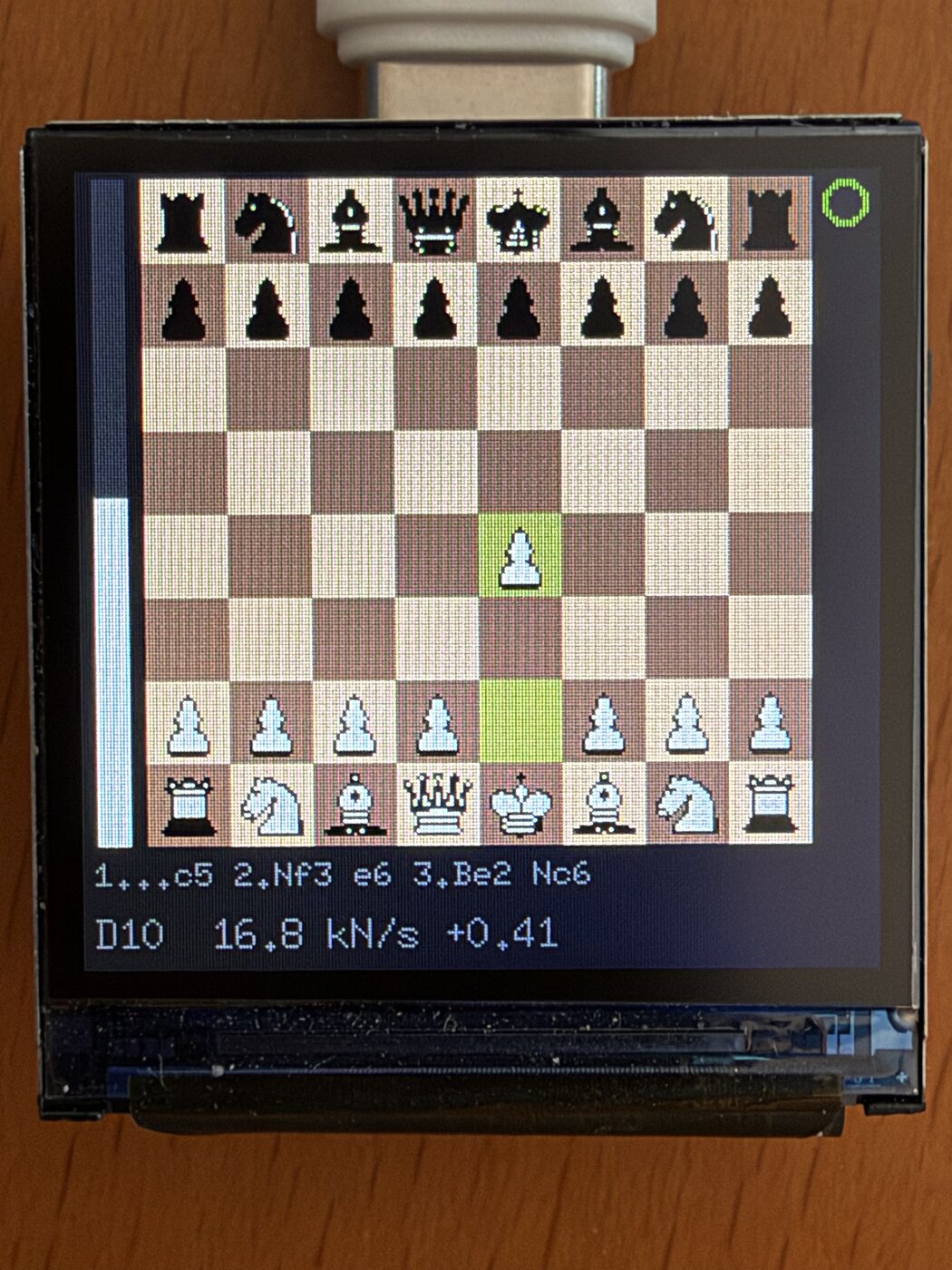
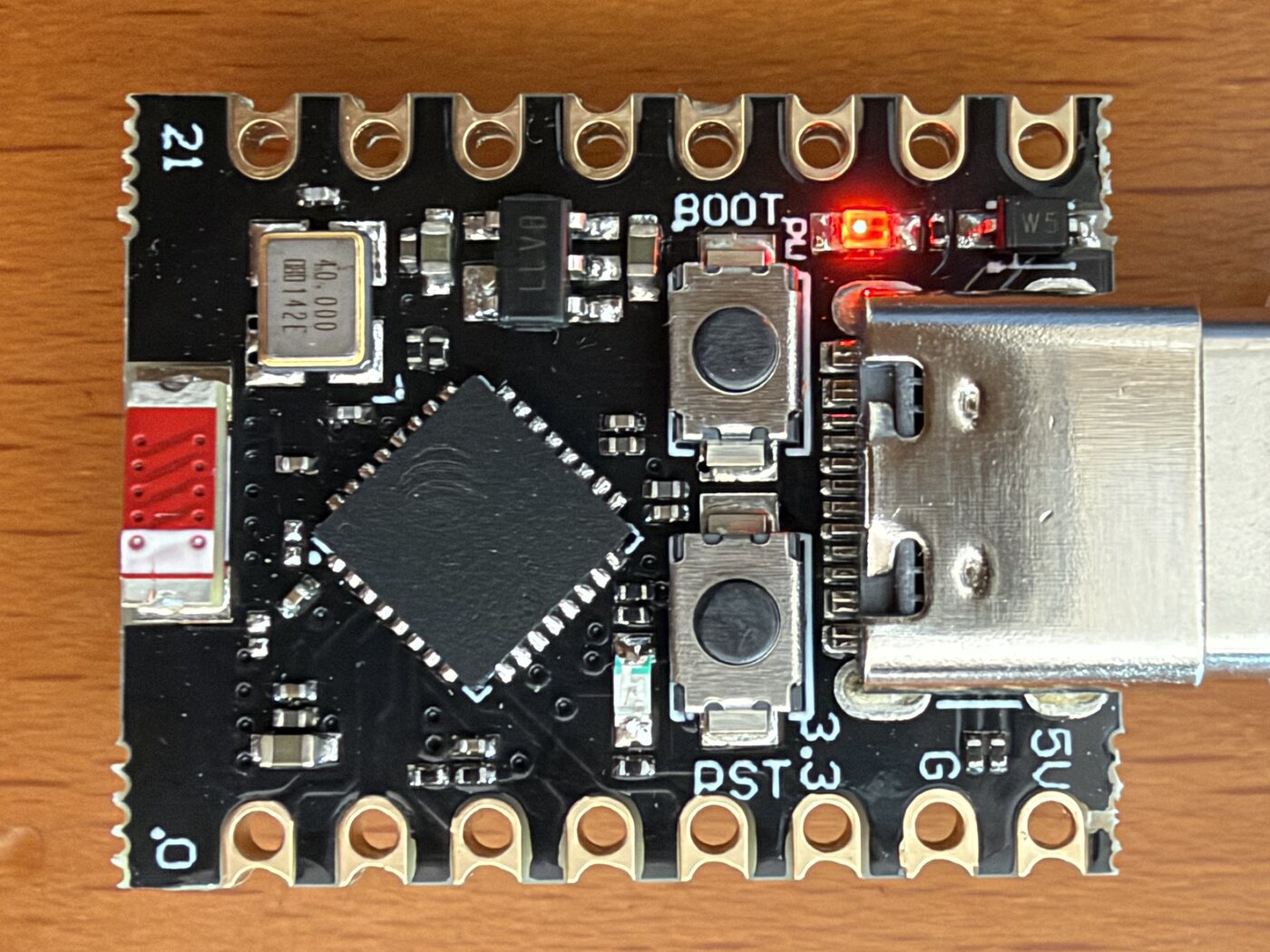
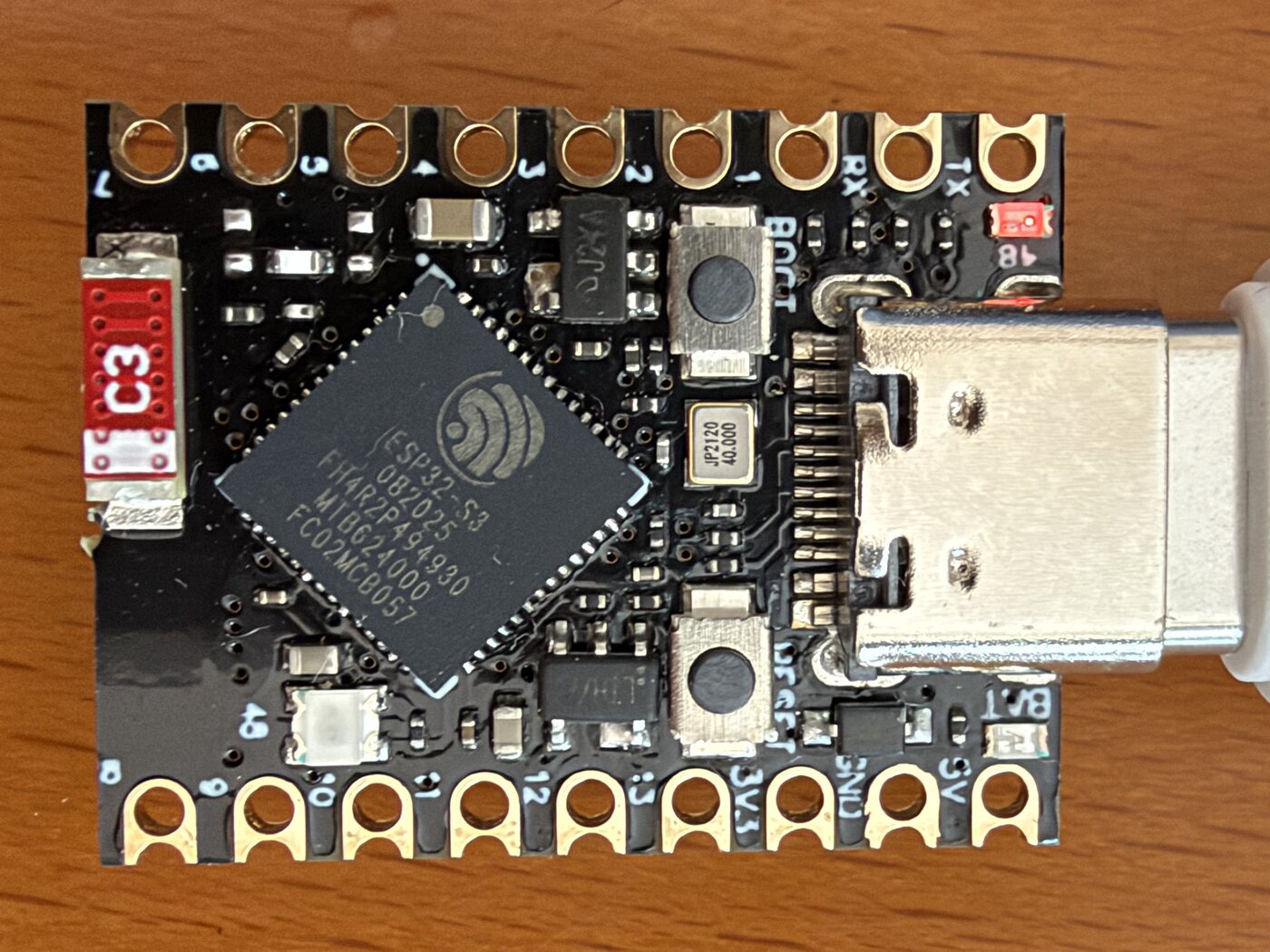
| ESP32-C6 | ESP32-C3 | ESP32-S3 | |
|---|---|---|---|
| Tested board | Waveshare ESP32-C6-LCD-1.3 | ESP32-C3 SuperMini | ESP32-S3 with S3FH4R2 (4 MB flash and 2 MB PSRAM in the package) |
| CPU | RISC-V, 160 MHz | RISC-V, 160 MHz | 2× Xtensa LX7, 240 MHz, SIMD |
| Display | 1.3″ ST7789, 240×240 | – (web only) | – (web only) |
| Engine speed (lab) | 19,400 positions/s | 14,800 positions/s | 38,000 positions/s |
| Depth in a demo game (10 s) | ~10 plies | ~9 plies | ~10–11 plies |
| Hash table | 40 kB | 8 kB | 1.75 MB in PSRAM (16 kB without PSRAM) |
| Strength | ~2590 Elo | ~2460 Elo | ~2740 Elo with PSRAM, ~2650 without |
The lab speed is measured on the same fixed set of positions with Wi-Fi switched off; in normal use with Wi-Fi and the display the engine is a few per cent slower. Strength is explained on the strength page.
Notes per chip
ESP32-C6 – the reference board. The engine runs as a low-priority thread next to the Wi-Fi and web server; the hot parts of the search live in fast internal RAM.
ESP32-C3 – the smallest and cheapest option. It has 112 kB less RAM than the C6, so the hash table is only 8 kB, which costs some strength. The small antennas of SuperMini boards are often reported to be weak; keep the board in the open, away from metal.
ESP32-S3 – the strongest: the engine runs on its own core and evaluates the neural network with the S3’s 128-bit SIMD instructions (+67 % speed). If the chip has PSRAM (S3…R2 / R8, detected automatically), the hash table moves there and grows from 16 kB to 1.75 MB: PSRAM is about 5 % slower to search with, but the engine plays about 100 Elo stronger. Boards without PSRAM run the same firmware with the small table.
Good to know
- Flash mode: the firmware uses DIO. Some boards (including the C6-LCD and the S3FH4R2) do not boot in QIO mode.
- Wi-Fi power: the transmit power is set to 15 dBm (the Wi-Fi driver starts at 5 dBm). The board’s antenna and position matter more than the setting.
- Temperature: under full load the ESP32-S3 measured about 50–60 °C inside the chip, well within its rating; the boards get warm to the touch, which is normal. The demo game pauses between moves when nobody plays. The chip temperature is shown in the web app (Settings) and on the C6 display.
- LEDs: the firmware does not drive any LED. A blinking LED on some boards most likely comes from the board itself, typically a battery-charging circuit without a battery.
- Power: any USB charger or computer port works; the board needs well under 1 W.